





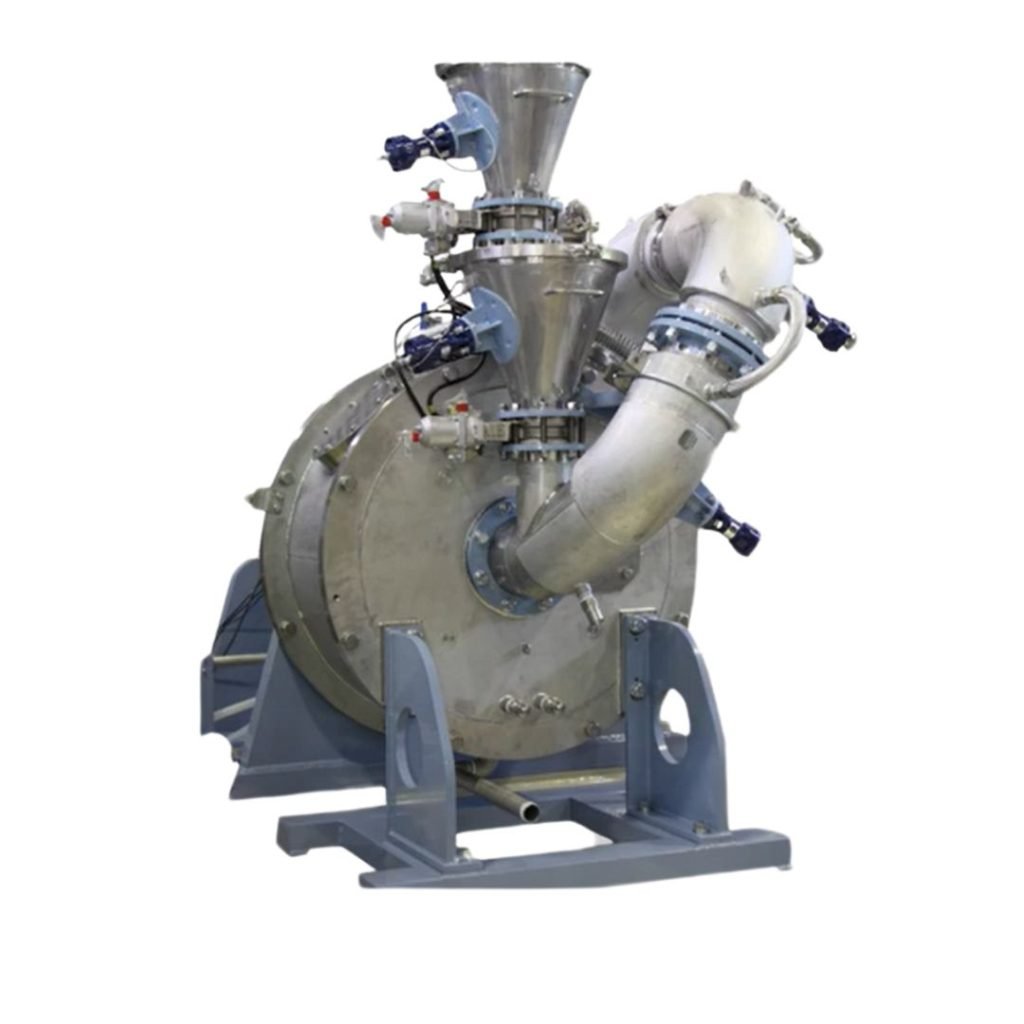
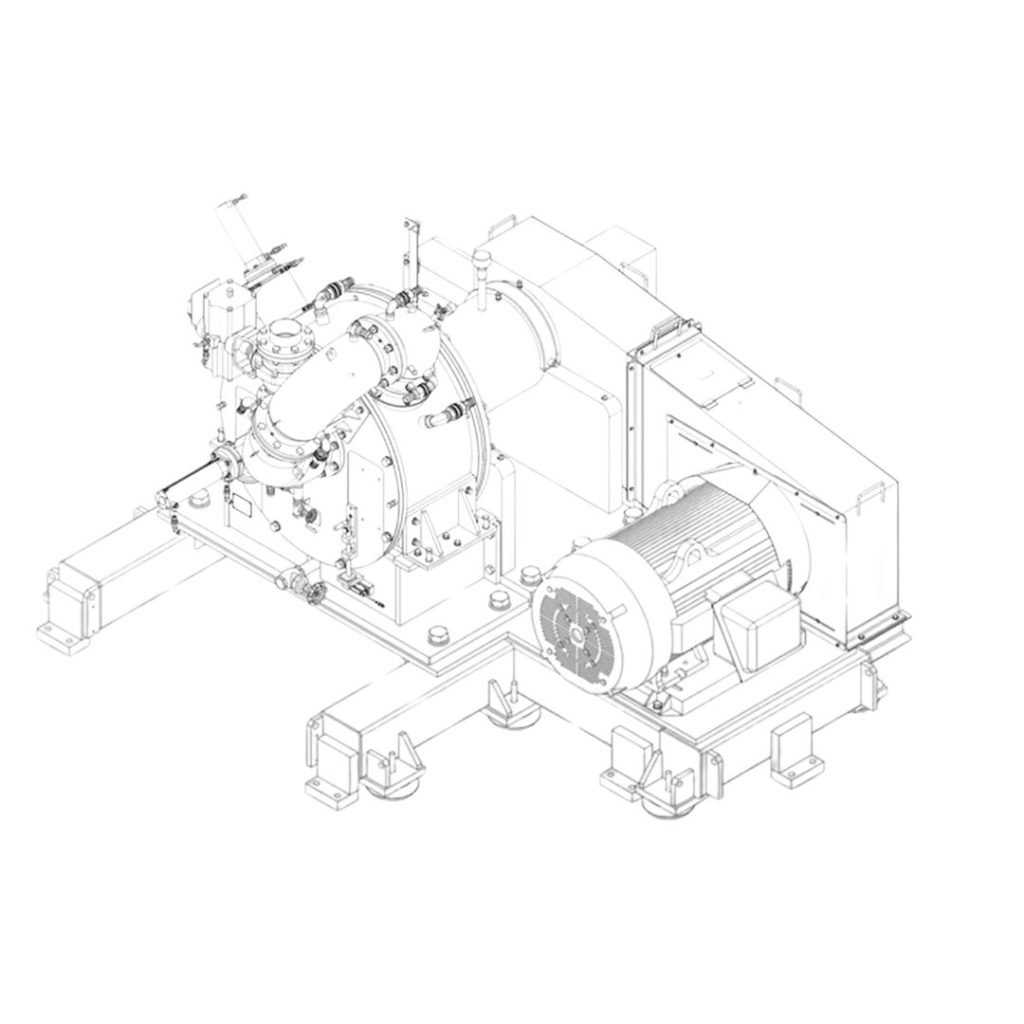

Nara Hybridization System
Advanced Dry Powder Surface Modification & Composite Formation
The Nara Hybridization System (NHS) is a state-of-the-art dry-process technology designed to enhance or entirely transform particle surfaces through high-speed airflow and impactful mechanical energy. By dispersing raw powders in a rapid gas stream and then subjecting them to intense mechanical collision, NHS efficiently performs coating, embedding, surface restructuring, and rounding—or “spheronization”—in just minutes.
Key Highlights for Your Application Needs
- Surface Modification & Composite Engineering: Enables a variety of modifications—dispersion improvement, wettability, controlled release, electrical/magnetic enhancement, catalytic behavior, coloration, surface texture control, sintering and crystal phase transformation, and weather/light resistance
- High-Speed Airflow Processing: Ensures excellent particle dispersion and uniform coating via rapid air circulation
- Inert Atmosphere Option: Enables processing of oxidation-prone powders (e.g., metal nanoparticles) within a sealed environment
- Versatile & Solventless: Default dry-operation eliminates solvents, with optional low-volume mist for enhanced control
Advantages
-
Fast & Efficient: Complete surface treatment in ~3 minutes.
-
Broad Material Compatibility: Supports unlimited raw material pairings.
-
Oxidation Control: Inert atmosphere processing for sensitive powders.
-
Environmental & Safety Friendly: Dry, solvent-free; optionally reduced solvent dosing.
-
Particle Shape Optimization: Spheronization capability enhances flow and packing
R&D & Industrial Use Cases
-
Toner Technology: Improved flow, uniformity, and imaging performance
-
Battery Production: Enhanced electrode coatings with controlled thickness
-
Cosmetics: Precise surface finishes on powders for improved feel and stability
-
Ceramics & Metal Powders: Spherical morphology improves sintering and density
-
Catalytic Materials: Enhanced active surface via embedded nanocoatings
Key Surface Modification Functions
Coating: Applying ultra-fine layers of wax, polymer, silica, or resin onto host particles to alter flowability, solubility, moisture resistance, etc.
Embedding: Incorporating functional fine powders such as conductive materials, pigments, or catalysts onto host particles.
Spheronization: Rounding of irregular or jagged particles into uniform, flow-friendly spheres for applications such as toners, food powders, or metal feedstocks.
Surface Roughening: Controlled mechanical wear or structural modification of particles to improve adhesion, texture, or reactivity.
Composite Particle Formation: Homogeneous mixing and structural integration of multiple particle types into a new functional composite.
Typical Applications
Battery & Energy Materials
Surface treatment of anode/cathode powders (e.g., LiFePO₄, graphite)
Coating with conductive carbon or polymers for enhanced cycle life and charge efficiency
Pharmaceutical & Biomedical
Rounding of dry APIs for better encapsulation
Embedding excipients or bioactive agents on carrier substrates
Cosmetics & Personal Care
Achieving silkier textures in powders
Coating with hydrophobic or fragrance-activated materials
Pigments, Dyes, & Colorants
Coating for moisture protection or surface gloss
Improved dispersion in polymer and resin matrices
Food & Nutraceuticals
Coating of functional supplements or microencapsulated flavors
Improving flow and shelf stability of powders and extracts
Metals & Magnetic Powders
Oxidation prevention via inert processing
Rounding of magnetic powders for improved packing density
Technical Configuration & Customization
The Nova Hybridization System is available in a range of models from lab scale to industrial capacity. All models feature:
Hybridization chamber with rotor
Air stream injector system
Powder inlet/outlet ports
Optional inert gas supply line
Optional solvent mist nozzle system
PLC control with process logging
Custom options:
Rotor types (material/geometry) for different powder characteristics
Chamber linings (SUS316L, ceramics, etc.) for corrosion or wear resistance
Explosion-proof and GMP-compliant designs
ATEX zone-rated construction for reactive materials
Strategic Advantages of Nova Hybridization
Feature
Dry, solvent-free operation
Ultra-fast cycle time (≈3 min)
Versatile material compatibility
Inert atmosphere capable
Minimal wear/abrasion
No grinding media
Consistent batch results
Benefits
Environmentally safe, eliminates drying, reduces regulatory overhead
High productivity, minimal downtime
Organic, inorganic, metallic, ceramic, and polymer powders supported
Enables safe processing of reactive/oxidizable powders (e.g., Al, Fe)
Efficient processing with low contamination risk
Easy cleanup and no risk of foreign particle introduction
Repeatable performance ideal for R&D and scaled manufacturing
Connect with us for your Powder modification Needs
Looking for a GMP-grade particle modification equipment?